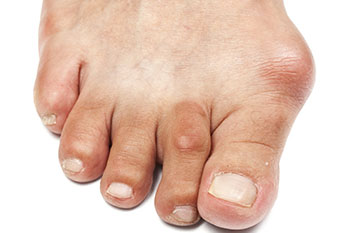
If you have arthritis, frequently wear tight fitting shoes such as high heels, and are older in age, it’s very likely that you may develop a bunion. A bony hump at the base of the big toe is the biggest sign that you may have developed this condition. Bunions are often painful and typically cause an extreme amount of discomfort. Because a bunion protrudes on the side of the foot, it’s likely for it to continuously rub against the inside of your shoe. This causes frequent friction and pain, which may cause calluses to form as well.
There are a number of ways to help alleviate discomfort if you’re experiencing pain due to having a bunion. To begin, it’s important that you maintain a healthy body weight in order to lessen the pressure put on your feet. Icing and warming the affected area may also help ease pain, as well as wearing wider-set footwear to avoid friction between your shoe and bunion. Some patients have also found shoe inserts to be extremely helpful for correcting the position of the foot. In more serious cases where the pain is severe, a podiatrist may recommend surgery for treating the bunion.
If you would like more information on how to best treat your bunion, we recommend you consult with a podiatrist as soon as possible for professional care and a proper diagnosis.
Lapiplasty
Bunions are complex deformities that can be very painful. Warren-Watchung Podiatry Center are pleased to offer a new, patented treatment for bunion correction-Lapiplasty® 3D Bunion Correction.
What is Lapiplasty® 3D Bunion Correction?
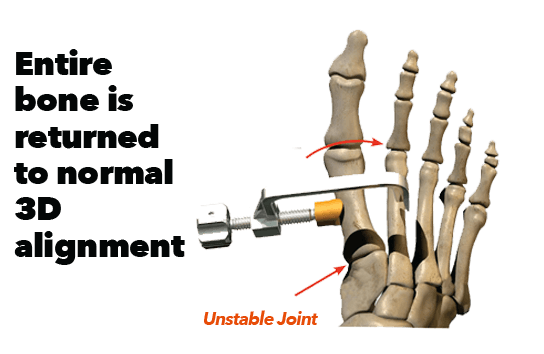
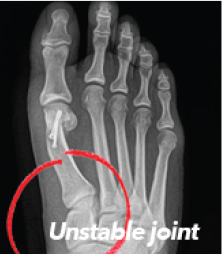
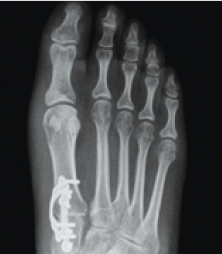
Lapiplasty® 3D Bunion Correction is an advanced surgical procedure that corrects a bunion by rotating the entire deviated bone back into its normal anatomical position. This is done using specially-designed instrumentation, naturally straightening your toe and removing the “bump” and associated pain. Innovative plating technology is used to permanently secure the unstable joint. Most patients are able to walk within days of surgery. No cast is required; allowing patients to get back to the shoe wear of their choice and activities quickly.
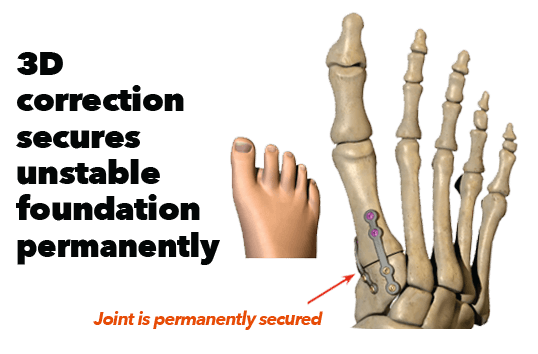
Lapiplasty® Patented Titanium
The Lapiplasty® Procedure utilizes two low-profile (petite), anatomically-shaped titanium plates to permanently secure the unstable foundation of your corrected bunion. This provides buttressing on multiple planes and allows you to walk within days of surgery. Think of this in terms of how a basketball player might hold a basketball. When a player tightly grips the ball with both hands, the ball is held more securely than if only one hand is used.
What Should I Expect In Terms Of Recovery?
The patented titanium plating technology used with the Lapiplasty® Procedure enables patients to bear weight on their foot early. The ability to do so can dramatically improve your recovery process, allowing you to walk up to 6-8 weeks earlier than with the more traditional Lapidus approach (which was previously the only option for addressing the unstable joint).
Being able to walk in a surgical boot, as opposed to being completely non-weight bearing (in a cast with scooter or crutches) for 6-8 weeks, means that you will be getting back to a better quality of life faster; may return to most occupations more quickly; and will be less inconvenienced by bunion surgery.
Frequently Asked Questions
Below are some questions patients commonly ask and their respective answers:
How long does it take to recover from a Lapiplasty® Procedure?
Patients are typically walking within days of surgery. Patients can return to most occupations within days to a couple of weeks, wearing a surgical boot. Within six weeks, you can expect to be walking in comfortable shoes such as tennis shoes, however you should not plan on any high-impact activities for 3-4 months. Short shopping trips and leisurely strolls are examples of the types of activities that should be fine at this point. Around the 4-month mark post-op, you should be able to return to most activities and most shoe wear.
Can I wear fashionable shoes again?
The Lapiplasty® Procedure allows most patients to return to their desired shoes. Of course, some fashionable shoes can be painful (even with a normal foot!), so results can vary from person to person and shoe to shoe.
Can I play sports after the Lapiplasty® Procedure?
Yes, there are no permanent activity limitations after the Lapiplasty® Procedure. Most patients are able to return to most activities after the bones have completely healed at approximately 4 months.
Can the Lapiplasty® Procedure be performed on someone who has previously had traditional surgery?
Yes, the Lapiplasty® Procedure is an option that can be utilized by your doctor when a revision is required. Even if previously treated, patients can experience the same benefits from Lapiplasty® - with a permanently secured foundational joint this time around.
I’ve heard the term “reproducible” used when describing the Lapiplasty® Procedure. What does that mean?
“Reproducible” means that a procedure is easily repeatable with expected results. The Lapiplasty® Procedure utilizes precision, patented instrumentation designed to take the guesswork and “eyeballing” out of bunion surgery; helping ensure your surgeon can get reliable results over and over.
Can the Lapiplasty® Procedure be performed as an outpatient procedure & how long does it last?
Yes, Lapiplasty® surgeries are performed as outpatient procedures. Typically, the surgery will last just under an hour. If your doctor is performing any additional procedures at the same time, the surgery may take longer.
The Lapiplasty Procedure patient education brochure
 Lapiplasty® 3D Bunion Correction Brochure
Lapiplasty® 3D Bunion Correction
Lapiplasty® 3D Bunion Correction Before and After
Small Scars,
Huge Relief.
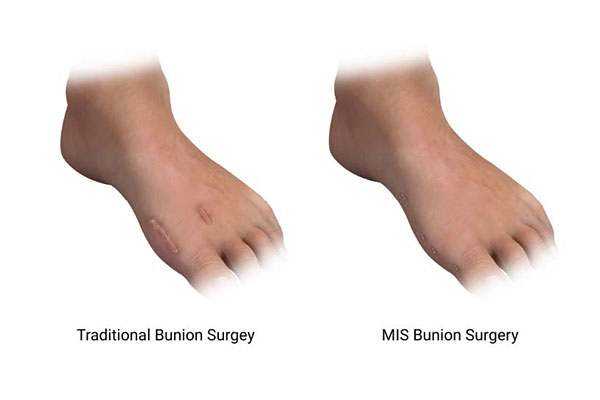
Minimally invasive bunion surgery is designed to correct your bunion through a discreet, hidden incision along the side of your foot.
Rapid recovery starts here.
Are you living with bunion pain but delaying surgery because you’re worried about the recovery? You aren’t alone. Many patients fear the downtime and scarring associated with other bunion procedures.
Minimally Invasive Bunion Surgery (MIS) is a cutting-edge surgical procedure to correct your bunion through small incisions on the side of your foot. and is designed to get you back on your feet faster, with less pain and minimal scarring.1,2
What are the benefits of a minimally invasive bunion procedure?
MIS bunion surgery addresses more than just the “bump”. While 87% of bunions are 3-dimensional problems4 with abnormal rotation of the metatarsal bone, the majority of bunion surgery is only 2-dimensional. When all three dimensions of a bunion are notaddressed, there is a 12X likelihood it will recur.4
- Smaller Scars
- Less postoperative pain and swelling1,2
- Less need for opioids postoperatively
Recovery After MIS Bunion Surgery
A typical recovery timeline is detailed below. However, timepoints and doctor’s orders vary based on each patient’s condition.
Be sure to ask your doctor what your particular recovery protocol will look like.
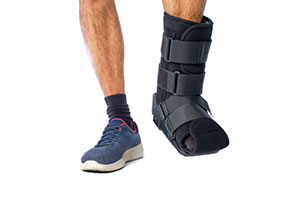
Up to 6 Weeksof protected weight-bearing.

At 6 WeeksMay return to regular shoes and typically resumelow-impact activities.
Around 3-4 MonthsTypically resume full activity.
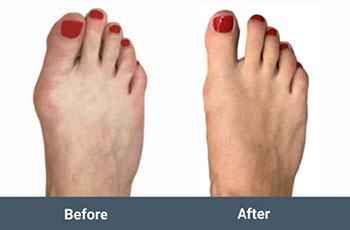
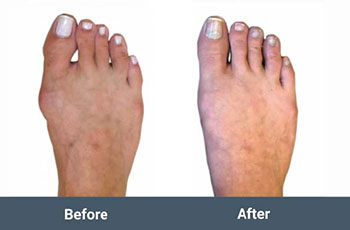
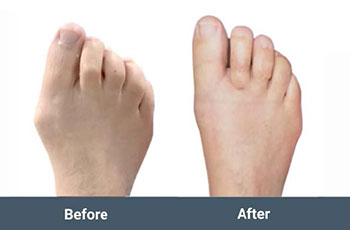
MIS Before and After Results
Individual results may vary. These results are specific to these patients only. All constructs shown are at the surgeons’ discretion.
Looking for More In-Depth Information, Including Benefit and Risk?
Nanoplasty Brochure
View BrochurePercuplasty Brochure
View BrochurePatient Risk Information
Patient Risk InformationLapiplasty.com
Visit Lapiplasty.com- Lee M, et al. Foot Ankle Int. 2017 Aug;38(8):838-846.
- Kheir E, et al. Foot Ankle Int. 2015 Mar;36(3):248-52.
- Chan JJ, et al. Orthopedics. 2020 Jul 1;43(4):e334-e337.
- Kim Y, et al. Foot Ankle Int. 2015. 36:944-52.
Important Risk Information: Only a surgeon can tell if the Lapiplasty Percuplasty™ and Nanoplasty Procedures are right for you. Individual results may vary depending on age, weight, health, and other variables. There are risks and a recovery time. For more information about recovery, see the recovery information and discuss the post-surgery recovery process with your doctor. Risks include infection, pain, implant loosening, and loss of correction due to improper bone healing. For more information about risks, see the Patient Risk Information. For information about how we handle your information, see our Privacy Policy.

