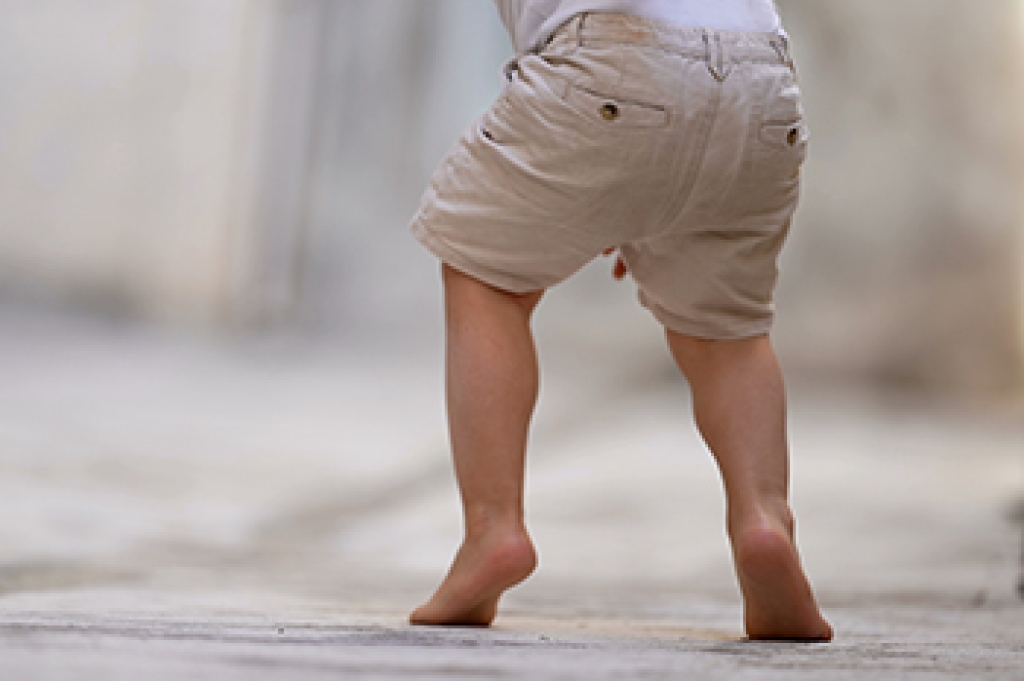
Children who walk on the balls of their feet without letting their heels touch the ground are toe walking. This pattern frequently appears when toddlers first learn to walk. Most children begin using a heel-to-toe pattern by the age of two. Persistent toe walking beyond this age warrants discussion with a podiatrist, especially when the child cannot stand with both heels down. Some children walk flat-footed when asked, but return to their toes afterward. Others have tight calf muscles that limit ankle movement. A podiatrist evaluates these differences to determine whether the pattern reflects a habit or an underlying problem.
Toe walking does not always have an identifiable cause. Doctors call this idiopathic toe walking, meaning that an examination has not revealed another explanation. A short or tight Achilles tendon sometimes prevents the heel from reaching the floor. This strong band connects the calf muscles to the heel bone. Less frequently, conditions affecting muscle control or nerves contribute to the walking pattern. Toe walking also occurs more frequently in children with autism, but toe walking alone does not establish that diagnosis. Walking on only one foot or suddenly starting after previously walking normally requires prompt medical evaluation.
A podiatrist begins by asking when toe walking started and how frequently it occurs. The examination includes watching the child walk and checking whether the heels reach the floor. The podiatrist assesses ankle flexibility, muscle strength, and foot alignment. Comparing both legs helps identify differences that warrant further investigation. Parents should report frequent falls, calf discomfort, or difficulty keeping up with other children. The podiatrist also reviews the child's developmental history and any family history of similar walking patterns. If the findings point to a nerve or developmental condition, the podiatrist may prefer to work with the child’s pediatrician or another specialist to plan care.
Treatment depends on the child's age, ankle flexibility, and examination findings. For a young child with flexible ankles, a podiatrist might recommend scheduled examinations to monitor walking and muscle tightness. A prescribed ankle-foot brace supports the foot and encourages heel contact. Serial casting uses a series of casts to gradually stretch tight calf muscles and improve ankle movement. Follow-up visits assess progress and identify recurring tightness. If your child continually walks on their toes, it is suggested that you schedule an appointment with a podiatrist for a diagnosis and appropriate treatment.
Making sure that your children maintain good foot health is very important as they grow. If you have any questions, contact one of our podiatrists of Warren-Watchung Podiatry Center. Our doctors can provide the care you need to keep you pain-free and on your feet.
Keeping Children's Feet Healthy
Having healthy feet during childhood can help prevent medical problems later in life, namely in the back and legs. As children grow, their feet require different types of care. Here are some things to consider...
Although babies do not walk yet, it is still very important to take care of their feet.
Avoid putting tight shoes or socks on his or her feet.
Allow the baby to stretch and kick his or her feet to feel comfortable.
As a toddler, kids are now on the move and begin to develop differently. At this age, toddlers are getting a feel for walking, so don’t be alarmed if your toddler is unsteady or ‘walks funny’.
As your child gets older, it is important to teach them how to take care of their feet.
Show them proper hygiene to prevent infections such as fungus.
Be watchful for any pain or injury.
Have all injuries checked by a doctor as soon as possible.
Comfortable, protective shoes should always be worn, especially at play.
If you have any questions, please feel free to contact one of our offices located in Marlboro and Watchung, NJ . We offer the newest diagnostic and treatment technologies for all your foot care needs.

